
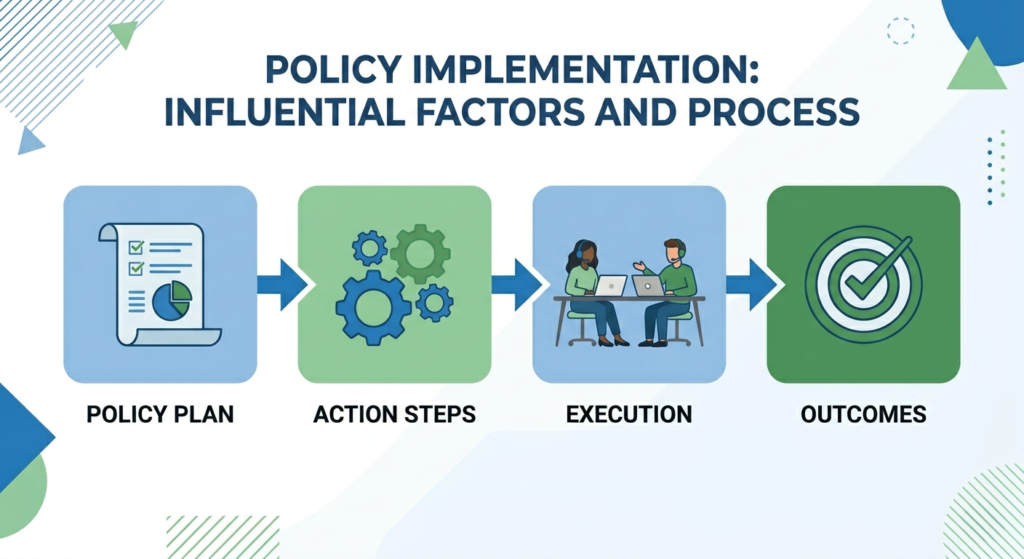
Implementation is the critical phase that transforms policies from concepts into concrete actions. It is the moment where intentions and realities combine, and its effectiveness decides the extent to which a policy’s declared aims are achieved.
Difference between Policy and Practice
In an ideal scenario, methods and aims should align perfectly, allowing policies to flow smoothly into action. However, in practice, the link between policy aims and the methods used for implementation can be questionable. This mismatch often arises because:
Disguised Aims
The declared aim of a policy might not be its genuine one. For example, the US “War on Poverty” was not solely about poverty but also about addressing racial issues and promoting political participation.
Influence of Factions and Ideologies
Policy-making is often influenced by groups with strong views, or by common beliefs and assumptions. For example, in times of prosperity, it is said that social care services give people more freedom and choice. But during economic crises, it is said that these same services help the government save money.
Bargaining and Compromise
Policy development is often a process of discussion, bargaining, and compromise, which can lead to non-sequiturs (idea not logically follow) or outcomes that don’t logically follow initial intentions. For example, more hospitals should be built, medicines should be made cheaper, or doctors should be sent to rural areas. After discussions and compromises, the government decides to build a new stadium in the city so that people take part in sports and stay healthy.
Influential Factors in Implementation
Once policies are introduced, they rarely proceed as a “perfect administration”. Instead, the implementation process changes the character of the policy due to various constraints and influences:
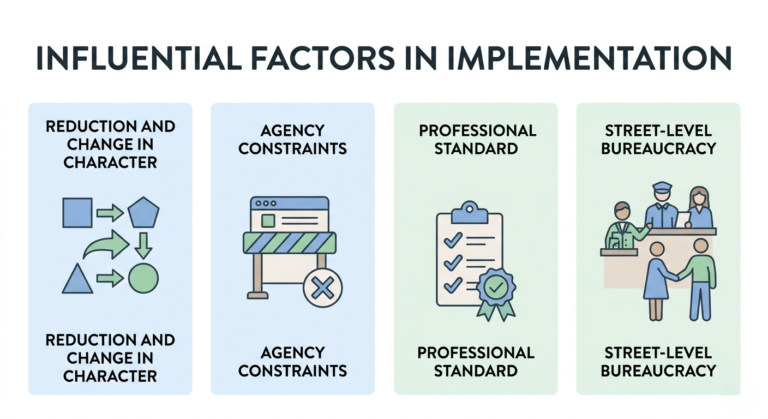
Reduction and Change in Character
Policies can be weakened due to practical compromises, such as land availability or planning restrictions in housing projects. Decentralized administrations also delegate decisions, creating points where policies can be delayed or diverted.
Agency Constraints
Agencies that carry out policies are affected by financial limits, problems in working with the public, the size of their operations, and external conditions. They have to decide how to use their time, effort, and resources.
Professional Standard
This influences the interpretation and implementation of policies by agencies. For example, the main focus of nursery provisions in schools is education, whereas in social care it’s child protection.
Street-level Bureaucracy
Lower-ranked bureaucrats make many decisions and have significant discretion. The decisions of individuals, constrained by limits and “service ideologies” that shape an agency and the outcomes of policies – often diverging from the core policy directions.
The implementation stage is multifaceted, involving the interpretation of rules, development of routines and judgements. Understanding of implementation includes what goes wrong, what can go wrong, and how to improve processes.
Implementation Process of Social Policy
Policy implementation is the stage of the policy process that turns policy into action, providing services and benefits to intended beneficiaries. This multifaceted process includes several steps and actors who collaborate to achieve policy outcomes.
Policy Design
Social policies need to be designed before they can be implemented. This includes defining social problems, goals, target groups and strategies to achieve intended outcomes. Designing social policies also involves considerations of finance, legal, administrative and evaluation arrangements.
Implementation Planning
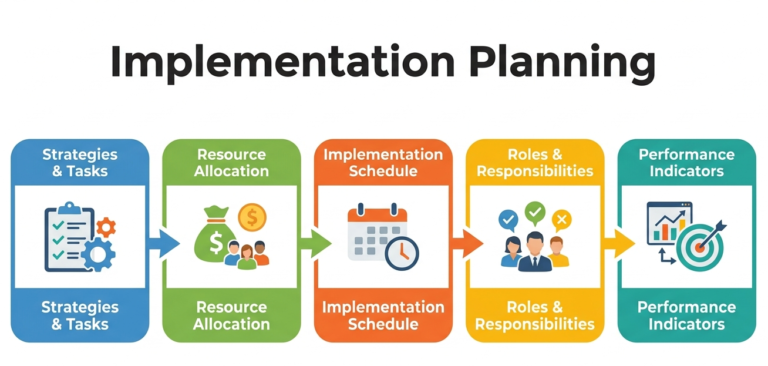
After a social policy is designed, it needs to be planned. This includes the development of strategies and tasks to achieve policy objectives, resource allocation, schedule of implementation, delineation of responsibilities, and performance indicators for evaluation.
Resource Allocation
Sufficient resources, such as financial, human, and material resources, are needed for policy implementation. Governments may have to obtain funding from budgets, grants, or other actors to ensure adequate resources.
Administrative Structures
Administrative arrangements are crucial for social policy implementation. This involves setting up agencies, departments, or task forces to oversee implementation, coordination across different government levels and sectors, and support for service providers and other stakeholders.
Service Delivery
Many social policies involve the provision of services and benefits. These can range from health care and education to housing and social security, employment services and other forms of support. Service delivery can take different forms, such as direct service provision by government departments, contracting with non-profit agencies or private sector providers, or cash or voucher payments.
Stakeholder Engagement
Stakeholder involvement, such as government departments, service providers, community-based groups, advocacy groups, and beneficiaries, is essential for successful policy implementation. Stakeholders can offer guidance, resources, and support to the implementation process, aiding in identifying challenges, resolving issues, and enhancing performance.
Monitoring and Evaluation
Regular monitoring and evaluation are important components of social policy implementation to evaluate effectiveness, efficiency and equity. This includes data collection, measurement based on defined indicators, analysis of achievements and shortfalls, and adaption and fine-tuning for better performance and to achieve the intended outcomes.
Feedback and Adaptation
The implementation of social policy is a dynamic process involving feedback and adaptation. Policies should adapt to evolving social, economic and political environments, and to new challenges and opportunities. This can include policy adjustments, resource reallocations, or the development of new initiatives to meet changing needs and circumstances.
Conclusion
The process of policy implementation is complex and ever evolving, connecting the worlds of policy and practice. Although sound policy designs are essential, the implementation process also requires careful planning, resource allocation, administration and evaluation.
Agency limitations, “street-level” bureaucracies and political realities often influence outcomes in ways that are inconsistent with initial objectives. Thus, policymakers need to be agile and responsive, adjusting strategies as needed to meet new challenges and ensure that social policies effectively meet the needs of those they are designed to benefit.