Is Education About Getting a Degree or Building Real Capability?
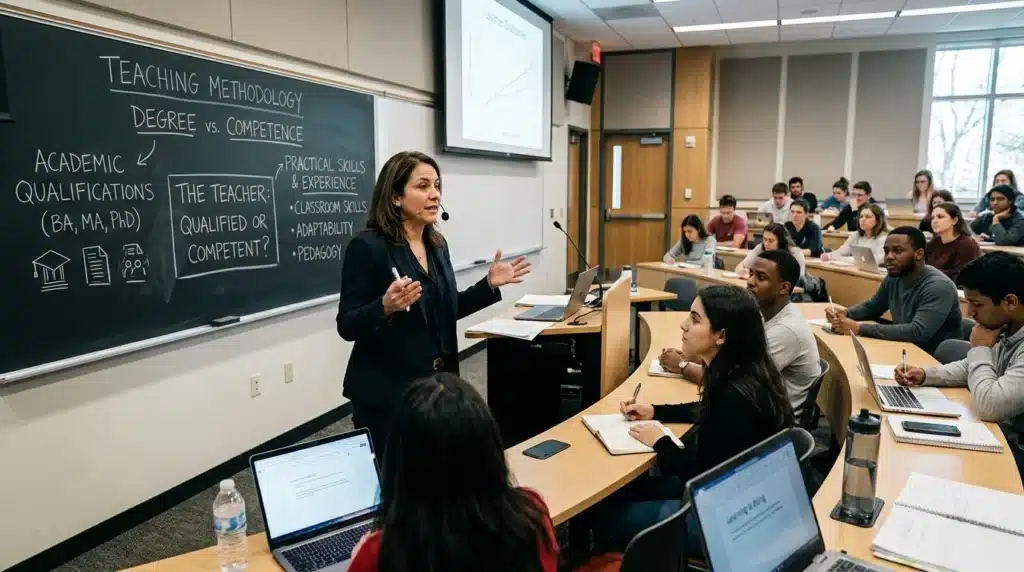
Education is not merely about earning a degree. Its true purpose is to develop competence, awareness, critical thinking, and practical skills. Yet in today’s educational landscape, an uncomfortable question repeatedly arises:
Are teachers truly imparting knowledge or simply helping students secure degrees?
And equally important: Are students genuinely seeking knowledge, or are they just chasing a certificate?
This debate is not theoretical. It is visible in our classrooms, institutions, and academic culture.
The Degree-Oriented System: A Growing Concern
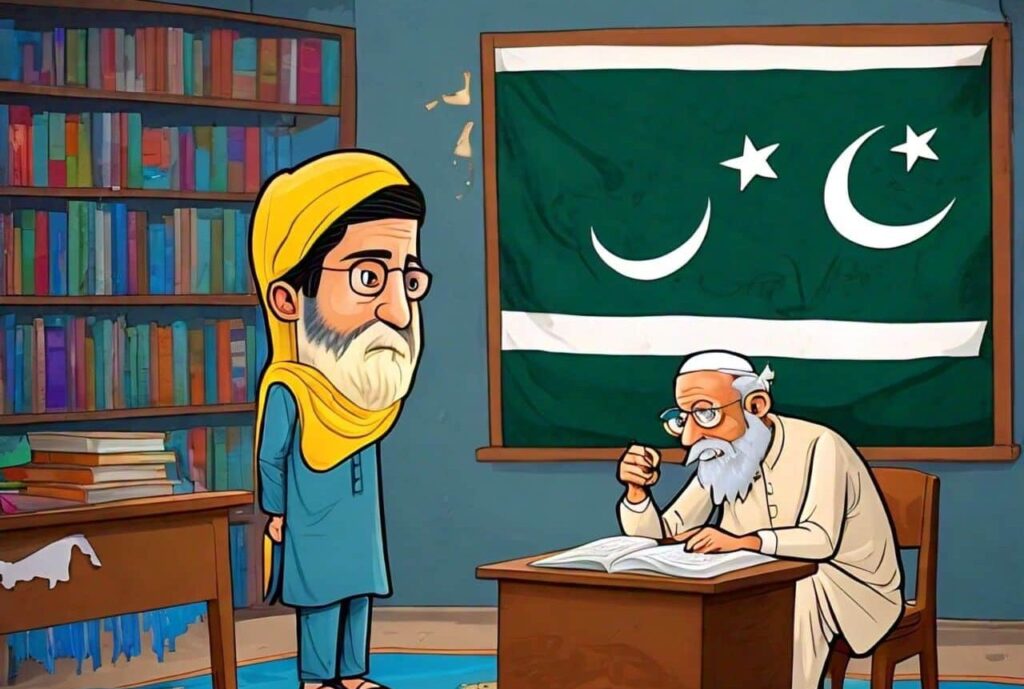
In many institutions particularly in smaller cities students appear satisfied because teachers focus primarily on helping them pass exams and obtain degrees. Teaching often becomes limited to:
- Following the course outline strictly
- Providing “to-the-point” exam material
- Focusing on GPA rather than understanding
- Simplifying content to ensure passing marks
While this approach may produce graduates, it does not necessarily produce capable individuals.
From my personal experience teaching in larger cities, I observed a different mindset. In major universities, students are more likely to question the quality of teaching. They may reject institutions where education is reduced to mere certification. This contrast highlights an important issue: educational awareness plays a crucial role in shaping expectations.
The Real Responsibility Lies with Teaching Methodology
The core issue is not the students it is the teachers.
Particularly those educators who:
- Graduated from prestigious universities
- Appeared in competitive examinations (such as public service commissions)
- Possess strong academic backgrounds
Such teachers are expected to:
- Teach beyond the syllabus
- Explain concepts, terminology, and theoretical foundations
- Develop analytical thinking
- Prepare students for real-world challenges
- Cover subjects comprehensively, not selectively
When teaching becomes limited to exam-focused summaries, the true spirit of education is lost.
The AI Dilemma: Where Does the Teacher Stand?
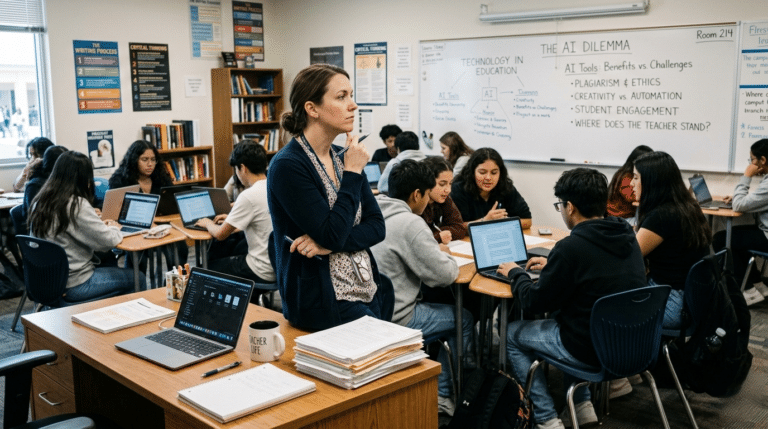
Another emerging concern is the increasing reliance on Artificial Intelligence (AI) for generating exam material. Today, students themselves can generate structured content using proper prompts. That same content can be translated and presented in class.
If teaching is reduced to AI-generated summaries and translations, an important question arises:
What distinguishes the teacher from a tool?
True teaching cannot be replaced by automation.
Teaching requires:
- Intellectual engagement
- Critical interpretation
- Contextual understanding
- Moral and academic guidance
Without these elements, education becomes shallow and mechanical.
What Defines Real Teaching?
Teaching is not the transmission of information. It is the clarification of:
- Concepts
- Ideas
- Logic
- Theoretical frameworks
A translated paragraph may be understood temporarily, but it does not build intellectual depth. Real teaching:
- Encourages questioning
- Promotes analytical thinking
- Develops independent study habits
- Challenges assumptions
- Connects theory with practice
A serious student is never fully satisfied. Such students question the quality of arguments and depth of preparation. If the material provided is weak or superficial, serious learners struggle to prepare effectively.
Teaching for the Learners Not Just the Degree Seekers
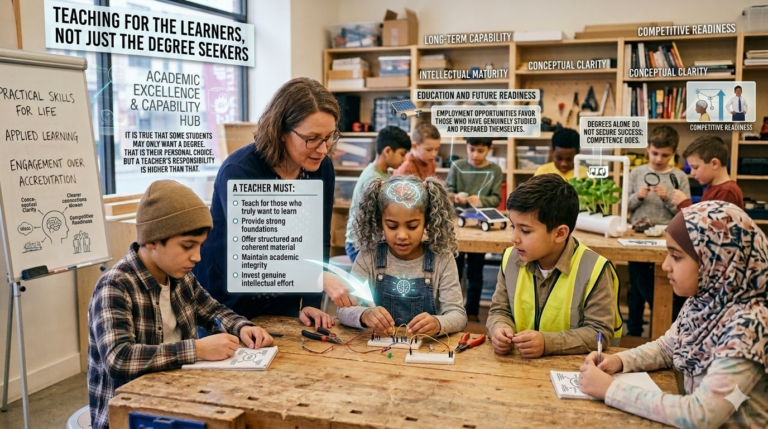
It is true that some students may only want a degree. That is their personal choice.
But a teacher’s responsibility is higher than that.
A teacher must:
- Teach for those who truly want to learn
- Provide strong foundations
- Offer structured and coherent material
- Maintain academic integrity
- Invest genuine intellectual effort
If teachers settle for superficial preparation, even hardworking students remain limited in growth.
Even students who do not immediately plan to pursue employment deserve a strong academic base. Education should empower them so that, whenever needed, they can confidently compete in any professional or academic field.
Education and Future Readiness
Employment opportunities favor those who have genuinely studied and prepared themselves. Degrees alone do not secure success competence does.
Therefore, teaching must focus on:
- Long-term capability
- Intellectual maturity
- Conceptual clarity
- Competitive readiness
When education prioritizes understanding over memorization, students gain confidence. They know that even years later, they can revisit their subjects and perform effectively.
Conclusion: Teachers as Architects of the Future
Teachers should not function as distributors of degrees. They should be architects of the future.
Education will rise in standard only when it moves beyond:
- Marks
- GPA
- Certificates
And becomes a process of building:
- Thought
- Understanding
- Competence
- Confidence
That is true teaching.
That is the real dignity of the teaching profession.